Chris Frank of the Elite Ice Hockey League’s Braehead Clan and the rest of Hockey Players Assemble are calling for hockey players all around the world to take part in the 2014 edition of #Muzzy4Money!
Everyone knows who the world has transformed November into Movember in which men grows mustaches for the entire month to raise money for men’s cancer research. Well, Hockey Players Assemble turn it up a notch by raising money for not only cancer research but one of the four charities that are selected by HPA!
Last year they raised a total over $3,000 dollars and they are definitely looking to double next month! There will be plenty of prizes for best ‘staches and ladies, you’re not left out! Prizes will be awarded for your creativity as well! Pick up anything around the house or workplace and turn that into the best handle-bar mustache the world has ever seen.
On November first, you’ll upload your bare face. Every five days you’ll update the world on your fantastic manly mustache.
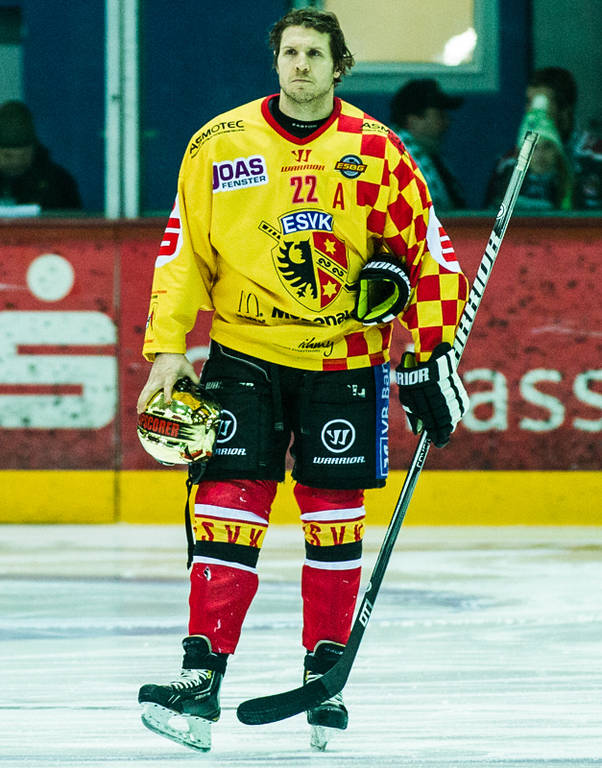
This campaign is calling for all you fourth line dusters out there. Come showcase your muzzy for money! (Bonus points for your best Lanny MacDonald impression.)
Here’s information on how to register: #Muzzy4Money (click the link)
The NHL is back for yet another season. Yet here I am, unmoved and slightly not as interested as I was in years past.
To say that the National Hockey League has changed since the days when I was younger would be a huge understatement. The face of everything in the sport has changed 100% completely. From teams and players to broadcasting and television hosts; it’s just not the same. You could attribute it to just growing up and being nostalgic about the past but deep down I think it’s simply much more than that.
In a nostalgic sense, I’m lost without Saturday night viewings of Hockey Night in Canada ringing out from the television screen. I realize it’s still going and I’m anxious to see what it’s going to look like but it hasn’t been the same since TSN bought the rights to its historic theme song. Gone are the days of hearing the Coach’s Corner theme song, listening to Don Cherry and Ron McLean banter back and forth during the first intermission break and people actually stopping what they’re doing to listen to Cherry speak (no joke, my family used to drop what they were doing.). Or during the second intermission, sitting through Satellite Hotstove and not Hotstove Tonight itching to get the third period started.
Afternoon games were unheard of on television. It was a privilege to be able to stay up and watch your favourite team on a school night.
The age of the enforcer is dying out. It’s just going to be a chapter in a hockey history book someday. When guys like Mike Milbury, who beat up a fan in the stands with his own shoe, is calling for the end of fighting in the sport you know times have changed. While I could sit here and list all the points as to why fighting and enforcing needs to stay in the game, there’s no point. With the advancement of how concussions and mental health have affected the competitive athlete, it’s a no brainer to end it when your own health is on the line. However, all these same things could happen with a body check, or a trip, or a slash, or even a hard face wash. Taking fighting out isn’t going to stop that.
(Photo: Mark Blinch/Canadian Press)
Everything has a price tag or an endorsement on it. I’m not against making money obviously, but everything just seems so over the top and extravagant. I miss the days of walking into an arena, smelling the fresh PLAIN ice that would just feature the faceoff circles, the goaltenders crease, two blue lines and a red line. Do we really need ref cams? It’s a cool feature but we’re getting a little overboard here.
There’s no loyalty with players anymore. Yes they sign 8 year deals but how many of them actually stick them out? They go where the coin is. You can’t blame them either; that’s all on the owner’s and GM’s but how does one grow attached to a player now? On the same note, there’s a lot of lazy players in the game today. Just want to skate by and grab their cheque. Like, I said, maybe it’s because I’m much older now and see the world differently but I can’t be the only one feeling this way.
That’s why I enjoy the minors and other professional leagues. These guys feel the need to prove something to their fans night in and night out just to keep their jobs. In reality, that’s exactly what it is. Professional hockey is their full time job. With the exception of the NHL and AHL, nobody is getting paid huge wads.
I’m starting to sound like I’m bitter about everything, but I’m not. Hell, if I was offered a $50 million dollar, 8 year contract I’d take it in a heartbeat. Who wouldn’t? But that’s just one area that proves how much the game has changed.
Maybe the spark of the NHL will come back and flicker in my eyes a few more weeks into the season. Maybe it won’t. Things change and evolve over time, that’s just life. Even though it’s changed so much since the days of my youth there’s one thing I can be grateful for.
It gave me the sport I love.
Disclaimer: I realize that there are millions of people around the world who are super excited for this season and I couldn’t be happier! This is just some thoughts coming from someone who has followed the game for over 20 years now.
The past few months seem to have been a trying time for the Philadelphia Flyers hockey club. One of their biggest decisions was the axing of their Ice Girls skating crew. You know, the girls who don scantily clad outfits and help scrap/shovel the ice in the middle of commercial breaks. (Or maybe they attempt to pump up the crowd. I don’t know, I haven’t really paid all that much attention to them until recently. *shrugs*) During the past couple of exhibition games, a new ice crew made up of men that came to fruition was met with a chorus of boos from the male-dominated fans in the arena.
Just like any other business would, the Flyers catered to their customers and with one loud “You asked! We’ve listened!” announcement, the Ice Girls were back and tryouts are being held in the next couple of weeks.
Now here’s where it gets stupid and why I’m torn between being for them or against them.
Personally, I kind of hold them in the same breath as cheerleaders. I realize some teams do cheer but most just clean the ice and get the crowd pumped. Obviously these Ice Girls are just here to entertain and enthrall the male masses. You also have a pretty strong case for their use of objectifying women. I wholeheartedly agree with both statements. You mean to tell me that in the “internet age”, men can’t go three hours without staring at a half-naked young women? The internet equals countless boobs my friend.
There’s also how these women are being treated. Wearing next to nothing in freezing arenas, not being able to wear jackets when they man the doors, not being able to be in the vicinity of ANY player at ANY time whether on the clock or not (it’s not the players prerogative to get up and leave, it’s the girl’s apparently) and much more are just some of the stupid things these girls have to deal with. They also get paid next to nothing. A great article goes into detail about what some of these girls go through and you can read it here.
However, there’s two sides to every story.
In a way, these girls are the embodiment of female empowerment. I’ve read great articles with some of the girls who thoroughly enjoy doing this. It makes them feel good and it makes them feel proud. Both of those things are hard to come by for a woman in this day and age. Sure, they might wear very little clothing but it’s done in a tasteful way. It’s not tacky or slutty. (On the ice that is. You could argue the fact the Ice Girls do sexy calendars. Well guess what, some teams have their players pose and print their own sexy calenders. That’s right, MALE players. And on another note for minor league teams, sold calendars means revenue for the club.)
I would also wager money on this.
I would put money on the fact of if these “fair-weathered feminists” had the body, the moves, the hair, and had the chance to become an Ice Girl and grab the attention that comes with it, they would. No doubt in my mind. (Notice how I say “fair-weathered”, you know the ones I’m talking about.)
If you step back and look at how the Ice Girl is practically just a sub-category of cheerleading, the Ice-Girl really doesn’t come across as such a bad thing. Hell, cheer-leading is a national sport now too. If people want to spin it around and throw a “sex” label on them then well, that’s their problem.
In conclusion, I see both sides of this argument and I agree with both sides. I guess I’m just kind of neutral on the whole subject. Both sides of the coin make really good arguements.
Like I said, I don’t really pay all that much attention to them.
I just know I’d never be able to skate and shovel at the same time. Way too clumsy for that mess.
When my article on the “Dark Side of Hockey” first hit the powerful waves of the internet, Carson Shields was one of the first (if not, the first) players to reach out to me. His story has been very well told in his province of Manitoba and maybe there’s been a little coverage out west but in my neck of the woods of Eastern Canada, I knew that nobody had heard this tale. Right away I wanted to make him one of the first parts in my “Dark Side of Hockey” series. He sent me links upon links of different articles that tell his horrid tale of hazing. I couldn’t even manage to get through watching a video interview, that’s how bad it stung me. This needs to be read by every single person in sports.
——————————
As a young kid growing up in Winnipeg, Manitoba, Carson Shields was fascinated by the Canadian winter past-time of hockey. Just like any other young boy in the country his age he became enamoured with it and one day dreamed he’d be able to take it in at the highest level; the NHL. Seeing something make their boy so happy prodded Shields’ parents to sign him up. He never looked back.
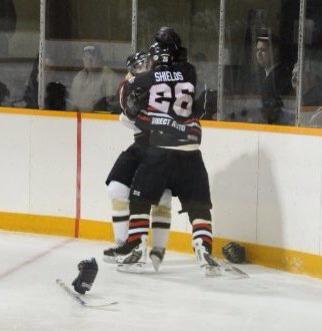
His early days in hockey saw him skate the ice with some of today’s powerhouses. Jonathan Toews and Frazer McLaren were both on his AA Assiniboine Park Rangers squad. By the time Shields reached his teens, his big frame had given him a bit of an enforcer label. Not in a bad way though. He was always the one who would stick up and be there for his teammates. A player that every guy would love to have on his line. The type that every coach would love to have on his team because he actually wanted to learn as much as he could about the game. His skills on the ice were good but not good enough for major junior. His junior career made him make eight different teams in four different provinces between junior A, B, and even C.
The dream of playing professional hockey was the fuel that kept him burning. He traveled so much his Dad (who earned Rookie of the Year honours in the Manitoba-Saskatchewan Junior Football League one season) gave him the nickname “Suitcase”. No matter, he was going to make it.
In his grade 10 year, Shields decided to try out for his high school team. Kelvin High School, out of Winnipeg, Manitoba saw Shields with growing leadership abilities. Along with his drive to play, he earned himself a spot on a team that was mostly made up of 11 and 12th graders.
As he progessed into a new year of junior hockey, Shields found himself as a rookie on a one team. The veterans introduced Shields to the glorious taste of alcohol, something that Shields would become close with in time. Part of the rookie experience on this team was to endure the dreaded hazing ritual then finally be considered one of the boys. Almost like a college fraternity, Shields and a few other rookies swallowed their pride and headed off with the vets to a house that was used for the team one weekend.
No coaches, no parents, nobody but young teenagers were at this so called party. Shields knew that because of his age and his playing abilities, it didn’t sit well with most of the vets on the team. After all, he was a 17 year old. That right there instilled fear to the veterans on the team. Shields could one day steal their job. As the new guy this was going to be their way of getting back at him.
To start off what I call “Hell Night”, the rookies were forced to strip naked in the street and were led to an area where they found six glasses of clear substances staring back at them. Five of them held alcohol, each a different kind. One was water. Once you found the water, you had beat the challenge. Seems simple enough right?
Well, these weren’t shot glasses. Shields went through glasses of vodka, white rum, Sambuca, and two others without finding water. Looking at the sixth one as his saviour, he swigged it down. Wasn’t water.
Once satisfied that the rookies had passed that test, they were fed even more alcohol. The veterans then shoved them all into a room upstairs where most of them were beginning to vomit. Not on the floor, but on each other. They were then forced to “bong” cans of beer. By this point Shields had blacked out. The last thing he remembers hearing were the words, “Alright!! You can bring the girls up from downstairs now!!”
Does he remember the night? He doesn’t have too. The veterans managed to whip out their cell phones and take pictures of the rookies in different humiliating poses. Some urinated on the group while documenting it. Who knows what those girls did to them. It’s these events that give Shields nightmares to this very day. Thankfully this was before the inventions of Facebook and Twitter.
After learning about what had happened to him, Shields contemplated packing it in and ending it all. How he continue with his life after being ultimately humiliated by people he thought had his back? To stuff the memories down, he became cocky and arrogant. His play on the ice dropped and he began using his fists more. Three more years of junior saw him ice 118 games (MMJHL, MJHL, SIJHL, Playoffs, Dudley Hewitt Cup) and capture 417 PIMS; that’s 27 fighting majors.
However, it wasn’t just the play on the ice that changed Shields. His whole demeanor changed. “After the hazing, I became completely out of control. Drugs, booze, women…ANY form of escapism. Anything I could do so I wouldn’t feel like that scared little boy laying on the bathroom floor in puke and piss, having pictures taken of me.” His partying and drinking escalated to where it was a daily occurrence. Thoughts of suicide danced around in his head. He sank himself into a deep depression.
Enrolling himself into the University of Winnipeg didn’t help his cause either. Nobody knew who he was, his hockey reputation didn’t proceed him. He started hanging with a rough crowd and turned to cocaine. During one night out with his drug dealer, he experienced an event that most people in the world never will. The cold steel of a 9mm on the temple of his head.
In one bar fight he got himself into (there was more than a few), saw him break a guy’s orbital bone and fracture his nose. It was beginning to catch up with him. “I was picked up for an Assault Causing Bodily Harm charge,” Shields recalls a much more frightening time which became some what of a wake up call. “I managed to get a great lawyer who got me a conditional sentence which sent me to an anger management program. As long as I completed the program there would be no criminal record.”
This is where Shields life started to take a turn for the better. Through the anger management program, Shields was able to peel back the layers and identify where his anger came from and understand it. The root evidently came from the night of hazing. It hasn’t been all sunshine and roses since but with counseling Shields has been able to come to peace with what happened to him and realize it wasn’t his fault. “I’ve come to terms with what happened to me. I’ve also come to terms with where it took me.”
His love for hockey unraveled but he began to coach. After getting close with some of the young guys on the team, Shields decided he didn’t want to see them go through what he did. So he came public with his story. “I don’t want anyone to go through what I did. I knew that I had to come out with my story and show that it’s important to talk about this dark side of the game.” Upon doing that, he set up an email account to converse with players around the world who were going through or have gone through something similar.
Shields took advantage of his acceptance to University as well. He graduated with a degree in Conflict Resolution Studies, a program that he obviously holds dear to his heart. “We have to continue to change the culture (of hockey).” He’s right. Without stories like these, people will continue to put players in the game on a pedestal. Without stories like these, we’ll continue to think that players are happy-go-lucky people who have it all when in reality, that’s not the case. Shields also goes around and speaks to local schools about his tale, mental health and the horribleness of hazing.
Shields story of courage and strength saw him be nominated and accepted as a “Hero of Manitoba” award winner for 2014. “Our Heroes of Manitoba” showcase the provinces every day people doing extraordinary things. No doubt, Shields was thought of during nomination. “I am very grateful and humbled. I had no idea so many people, teammates and players had nominated me. I didn’t come out with my story to win an award. But hey, if it keeps the conversation going and I can be used as an example of “what not to be”, it is all worth it.”
“All I hope is that the junior community continues to address, be proactive and support players who are struggling in all aspects of the game, not just hazing.” He’s absolutely right. Too much is focused on the playing abilities of the players and not about how the game affects them physically and mentally. The shift in thinking can only help to create stronger players in the long run. “I think the OHL has made a great decision in establishing this new program dealing with the mental health aspect of the game.”
So what’s up for Carson Shields this hockey season? Not much. “I decided to take a step back from the game this year. I played, I scouted and I coached…feels good to just be a fan,” He’s not gone from the game entirely however. “I still keep the door wide open for any player to reach out. I am responsible to that.” He’s in the process of expanding his journal that he had during his hockey days and turning into a memoir entitled “The Beauty”.
Carson Shields is a person who, in the short time we’ve chatted and gotten to know each other, I look up to as a symbol of strength and courage. Take the time to follow him on twitter and send him a tweet of respect. You can find him @CarsonShields23.
———————————-
Feel free to follow me on Twitter: @MarchHockey and like the page on Facebook: http://www.facebook.com/marchhockey and send me a message! If you know any player who’d be willing to add their story to the “Dark Side of Hockey” series, send them my way!
I had originally set out to make a part 2 of my article “The Dark Side of Hockey: What people never think of” and delve into the sections with a little more detail. However yesterday, I got a message to my facebook page that immediately required action and have it brought to the forefront of my attention.
When I originally wrote that article I was fed up with hearing how my friends in different teams throughout the world were being treated and how rampant mental illness is in sports with nobody doing a damn thing. I figured at the very least I could write about it and try to bring some awareness to society. I remember thinking that if I could help just one person it would all be worth it.
It was worth it.
Todd McIIrath reached out to me on the afternoon of September 24, 2014 with a lengthy message. Here’s a brief excerpt:
“I stumbled upon your original article about a week after I had been planning to take my own life. I felt as if I was battling something so unique to MY situation until I read the first half of your article. Your article saved my life. I am literally driving from Wisconsin to my hometown in Michigan to admit myself into a facility in an attempt to rebuild. Thank you.”
I could not just leave that message sit and not respond. I responded right away and found out that Todd was in the passenger seat of a car at that very moment with another 5 hours to go before he was admitting himself into a facility in Eastern Michigan. I’m a fairly easy person to get along with so we naturally started a conversation on the topic that fate joined us together with. I then asked the burning question if he’d want to tell his story. With actual enthusiasm he obliged and had the same mentality I did: “If it helps just one person Ash, then it was worth it.” Hey, I had all night. I was all ears.
By the time McIlrath had hit bantam, he knew he was something special in the hockey world. Having played with names such as Erik Condra and Matt Taromina, McIIrath was drafted to the Plymouth Whalers of the Ontario Hockey League in the second round. Weighing his options, he decided to sign an offer with the United States National Team Development Program and stay a bit closer to home.
He was off to a heck of a start for his junior career. As with all athletes however, he was faced with adversity and well, it wasn’t really his strong suit. Tacking onto his drinking and smoking marijuana that started in Grade 8, McIlrath had started using almost every day. Getting caught cheating on an exam saw him lose his scholarship with the USNTDP as the coaching staff no longer had confidence in him to crack the lineup. However, he could return to the team the next season but had to go to high school in his home town and commute to the practices and games. To cope with not only the loss of time but to gain an edge, he turned to the drugs of Ritalin and Ephedrine. “This was during the height of ephedrine awareness. Athletes were dying, and I was buying yellow jackets by the bottle on a weekly basis.” In the midst of
McIlrath with Indiana. (Photo: facebook)
this he had managed to commit himself to Notre Dame University and the Fighting Irish hockey team. Towards the end of the school year, a plagiarism incident put the stop to that entirely. He lost the confidence of not only his coaches but his teammates and most importantly, himself. “At this point I was the problem child. I began to alienate myself from my teammates.”
The following summer was a blur built around girls, booze and drugs. When he arrived at camp that very fall, the team had brought in two new forwards. They clearly had no use for him. “The writing was on the wall. After getting healty’d (scratched) the first six games of the year,” McIlrath recalls. “I packed my car and went home.”
By now his agent was already in the middle of a three way deal that was trying to send him back to the OHL albeit with the Sarnia Sting. His parents turned him off of that idea as they wanted him to play NCAA so he managed to land himself in the USHL with the Indiana Ice. The season started off great and seemed like all of McIlrath’s problems were behind him until he popped his shoulder out in the middle of November. McIlrath moved home to have surgery and was sent off with a bucket full of pills and self-described “post-rookie season swagger”. For the first time in his life he was a normal kid, at home, with no responsibilities. Naturally, the partying became out of control. “I can remember playing drinking games with the option to take a shot, or take a pill; on a school night.” Vicodin and booze saw his new found confidence sky rocket. It also gave him an addiction to prescription medication.
The following season he was billeted with a family that was fairly well off and had a full bar set up in their basement. He was still addicted to pain meds but had upgraded to oxy-contin from having built up a tolerance to Vicodin. “‘Vicodin isn’t cutting it anymore’ was enough of an explanation for my doctor.” By Christmas he was leading the league in points but to his discredit (or credit depending on how you look at it), he only iced a handful of games sober. “My game day routine involved popping an 80mg tab of oxy before my pregame nap, and snorting half of one before I left for the rink.”
Of course his luck got even worse. His first game back from Christmas break saw him tear his ACL. “To this day, I swear it happened because of what I put my body through on a nightly basis.” It was at this point where he began to struggle with how people saw him.
McIlrath with Bowling Green. (Photo: Christine Towles.)
He donned a narcissistic attitude that would make him lash out at people if they didn’t treat him like a God. He’d avoid people that would try to keep him humble and fed off of the rest that told him how great he was. That summer he committed to Bowling Green State University but instead of going, he decided to stay back one more year in junior to be a big fish in a small pond.
“When I think about BGSU (Bowling Green State University) my brain immediately associates it with coke, girls, alcohol and hockey. In that order.” McIlrath had enjoyed a very positive and acceptable first year at Bowling State. By the end of it, he took a job bouncing at a local bar and that’s when things inevitably turned sour once again. “I was always a yes man, so when someone asked me if I wanted a line (of cocaine), I was in deep.” In fact, he played his entire sophomore year on cocaine and you wouldn’t know it from looking at his numbers. Fate came twisting again when his coach’s friend ran into him at the bar while McIlrath was drunk. The coach brought it up at a pre-season meeting and once again he was back in the dog house. He was jerked around every which way; in and out of the line-up, demoted to defence, encouraged to give up for good among other things. By December of his junior year he didn’t care and just focused on playing for fun. After more partying behaviour, the coached took the matter into his hands and gassed him. It was over. He played his final year and graduated with a major in Psychology. “Yes, the irony isn’t lost on me.”
That was it. Hockey was over.
He spent the next three months in an alcoholic haze and the next two years depressed without a hope in life. A friend however told him about the AAHL; the All-American Hockey League. “This league was absolute hell, but I was playing again. This was verbatim the league you spoke of in your article. Five fights a game, not sure if we were getting paid, three guys in a one bedroom apartment; gong show.” The use of his hockey talent gave him a bit of hope. He managed to catch the eye of an organization in the East Coast Hockey League. Through all of the booze, drugs, highs and lows, McIlrath felt like he was being given a second chance. Determined to not blow it, he obliged when the team offered to fly him out on game day.
“And I kid you not, I tore my ACL again in my third shift!”
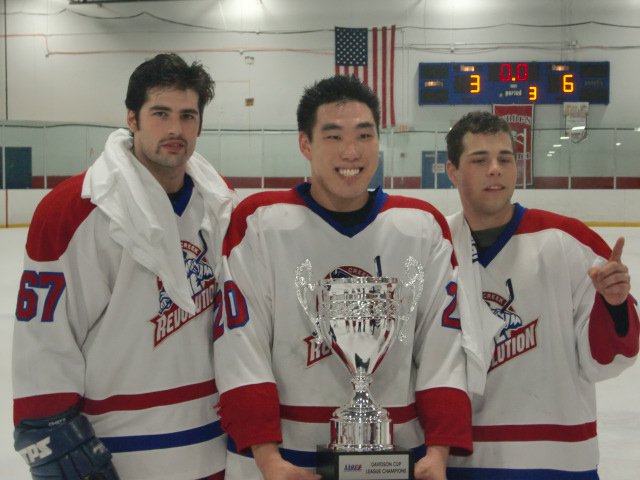
A constant string of bad decisions combined with even worse luck started to eat at him. As his depression worsened, it’s here where McIlrath first entertained the idea of taking his life. He managed to get a coaching gig with an independent team but was fired when the owner found out he was a coke head. Defeated he turned back to the AAHL and won a championship with the Battle Creek Revolution and signed on for next year
Winning the AAHL championship with the Battle Creek Revolution.
with the Fort Wayne Komets. The bad luck didn’t stop as a drama with his twitter account made the team let him go and that was the end of that.
Depression came back in full force and after a month of feeling sorry for himself, he managed to call up a friend who got him a coaching gig with a junior B team. Things started to seem normal at a steady pace again. The team placed third in nationals and by the end of the year, he had found himself quite the lady that was smitten with him. He turned her into his wife.
However after a few problems in the relationship arose, McIlrath reached his all-time low. He quit coaching and succumbed to the blackness of his depression. He managed to stay alcohol and drug free for an entire year before these problems existed. Determined to save his marriage, he invested and opened up a hockey school. In its second year of existence, it was all too much. “Everything on the surface was silky smooth, but as cliché as it sounds, I was just another duck on the pond.” McIlrath knew that his sober living was limited. “The money started pouring in, and it was flying up my nose faster than I could pay the bills.” He managed to save enough money to pay his employees and the bills on time when they arrive but that was it. “Every spare penny went toward living a rock stars lifestyle when I was barely getting by.”
Things continued to be rocky. On Fourth of July weekend of this year, McIlrath blacked out a party and hit rock bottom in his depression. “My plan at this point was to get through the summer, finish my hockey school, have a night out with the boys and take my own life.”
“So I decide to take a victory lap. I visit my family, and closest friends over the past few weeks and prepare my exit. I had my spot picked out, and even now I have a rope hidden under a pile of clothes in my car. I decided a jump from 80′ might not kill me so I decided to hang myself from the same height.”
“I woke up this past Monday dripping in sweat. This was going to be the day. But after reading your article for the 50th time it is my goal to be an example of strength rather than becoming a statistic. Especially since I’m going to be a father.”
I immediately got McIlrath in touch with Corey Bricknell, a former hockey player who started an organization with other former players called “Fighting the Truth”. FTT is an organization built to help players, whether former or still playing, deal with mental illness and the trials and tribulations of professional hockey. They had reached out to me after reading my article as well and I’m proud to say that I’ve joined their organization in helping create awareness.
Mental illness is nothing to be ashamed about. I applaud Todd McIlrath and think so highly of him for his decision to get help. As I’m writing this, he is in a treatment center in Michigan surrounded by his no doubt loving family and there is not one damn thing he should be ashamed of either. I hope you’re doing well right now Todd, I’m thinking about you tonight. Thank you for telling your story. I know you’ve helped someone.
Depression isn’t a sign of weakness; it’s a sign of being strong for too long. It’s time to end the stigma.
#YouAreNotAlone
Feel free to follow me on twitter: @MarchHockey or like the facebook page: www.facebook.com/marchhockey as I continue to add stories to this growing series dedicated to creating awareness of mental illness in the hockey community.
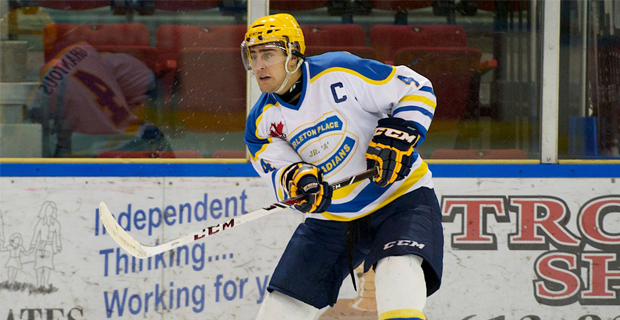
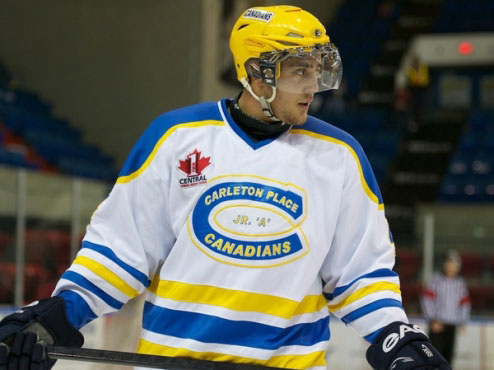
To say that Elias Ghantous had a huge season last year would be an understatement. In his fourth and final season with the Carleton Place Canadians, Ghantous captained and lead his squad to not only win the Bogart Cup but the Fred Page Cup as well. If it weren’t for a couple of brief moments in the last game of the Royal Bank Cup tournament that showcases that countries best Junior A teams, he could have put RBC Cup champion on his resume. However, being second in the country isn’t a bad showing either. It’s also not very often that a bodycheck from the CCHL makes Yahoo Sports either.
Ghantous is currently suiting up for his first season at Robert Morris University. I caught up with him to talk about his amazing final Junior A season.
(Photo: Robert Lefevbre. IceLevel.com)
March Hockey: What was like to captain the Carleton Place Canadians last year? Did you feel you needed to change your ways as a player?
Elie Ghantous:Not at all, I just knew that i was going to be a big influence on my teammates and made sure my work ethic was perfect in order to make them better. I loved being the captain, I feel like I’ve always been a leader and it really helped that every one last year was on board with our team goal.
MH: Of course winning the Fred Page Cup is a huge accomplishment as a Captain in that you’ve lead your team to the holy grail. How did you and the team prepare for that series and what was it like to finally raise the cup?
EG:The Fred Page Cup was a great experience as a team. It sort of brought back the minor hockey tournament feel in all of us and it was just exciting. The captains all played an important role in maintaining the team focused. We had a lot of things up against us; we were mistreated at times but we managed to push through that and go undefeated. Lifting that cup was a great feeling (a lot heavier than I expected!) and it made us realize that we had our ticket to the Nationals. I still remember it like it was yesterday.
(Photo: Robert Lefevbre)
MH: Making the finals of the RBC Cup is an even bigger accomplishment! I remember smiling as I saw a team from the CCHL on TSN. How was the experience of playing hockey in front of a national audience for you? Was it intimidating with not only the media but the weight of the tournament itself?
EG: Playing at the RBC cup was a dream come true. The atmosphere was just awesome and Team Canada ran a top notch tournament. We had access to food, gatorade, and water at any time. It made us feel like a professional team and it showed in our play. Playing in the final game I was very nervous at first but I remembered that all my friends and family were watching back home and all I wanted to do was play hockey. Most definitely the best hockey experience of my life so far.
MH: This is your first year suiting up for the Robert Morris Colonials of Robert Morris University. How did you prepare during the offseason for your first NCAA season?
EG:I trained at the Ottawa Sports Performance Centre, like I have for almost 8 summers now and I just focused on my foot speed. My workout partners are also NCAA athletes and I received a lot of knowledge through them about what i needed to work on. Lifting 5 days a week and skating twice a week was what I did and i enjoyed every second of it.
MH: Where do you see your hockey career taking you?
EG: I hope to one day, like any other hockey player, play professional hockey. I realize now that it is very hard to make it to a professional league so going to school gives me something to fall back on. Hockey has brought me here so far and I’m already ecstatic about where I am now.
MH: Who do you look up to most if anybody for your style of play?
EG: I’ve always admired Scott Stevens. He was feared by all in the league and with obvious reasons. His defensive play and hard hits and synonymous with my style. He was also a great leader and won the Stanley Cup 3 times.
(Photo: Robert Lefevbre.)
MH: If you could play against any player from any decade, who would it be and why?
EG:The league is just so good now that I would love to play against anyone in the league. But first I would love the opportunity to make one of those teams. If I were to pick one person, it would be Sidney Crosby. I would like to play against him just to compare myself to the very best and see how I would do.
Thanks so much for your answers Elie! I’m going to check in with you half way through the season and see how far you’ve come along with the Colonials! All the best for the first part!
Feel free to follow me on Twitter: @MarchHockey and like the page on facebook at http://www.facebook.com/MarchHockey for more player one on ones this season!
At the height of the Cold War, one could say that everything in the public was scrutinized more than necessary. There was a hint of secrecy and in other words a terrifying sense of immediate nuclear destruction that could tear the world apart in an instant.
Sport had its own Cold War and in particular, hockey.
And if there’s two things on this planet that really turn my crank, it’s history and hockey.
In the 1980s, Communism in the Soviet Union was in full swing yet slowly starting to die. A win in the sporting world equaled a win for the whole country and in extreme aspects, a win for Communism. Sport was used as propaganda for the nation and the Red Army team were the country’s main idols. It came as no surprise when former Soviet Army general Viktor Tikhonov lead one of the best and one of the most feared hockey teams in the game. Feared because they had the Iron Curtain hanging over their shoulder and the KGB watching every move.
Without beating around the bush, Tikhonov was hard. One could point out that on the ice and behind the bench, he ruled his team like a Dictator would his country. After all, maybe he did see his team as a country looking to invade and capture foreign land. His time as a general led him to create very unorthodox coaching styles. Players would have to train 11 months out of the year, away from their familiars and live in
Tikhonov in 2010.
the provided barracks; no doubt a salute to life in the army. Slava Fetisov, who captained the Red Army squad, was trained so hard that it has been said he could skate backwards as fast as any Western player could forward. How’s that for conditioning.
Former Soviet Union coach and credited as the god-father of Russian hockey, Anatoli Tarasov was once quoted as saying: “A hockey player must have the wisdom of a chess player, the accuracy of a sniper and the rhythm of a musician.” You could, quite frankly, describe Tikhonov’s team in that exact way. Of course, playing together for 11 months out of the year will definitely bring talent together at outrageous circumstances but the stickhandling, skating, and overall look of hockey the Soviets gave to it pushed the sport ahead 20 years in time.
Tikhonov’s methods were built around the strategies of the game. Working down angles. Being able to have that Gretzky instinct of knowing exactly where your teammates were with the puck. God forbid if you didn’t have a clue. He learned his ways of course pig-backing from tactics that were put in place by Tarasov. Practices would leave you barely making it back to the locker rooms and passing out from exhaustion on the ice. They both expected everything from you.
While they demanded your best, Tikhonov and in a much broader sense, the Soviet Union would give their stars players nothing in return. Most didn’t receive big cheques; they were a pittance at best and then shunned after their big wins. After all, it wasn’t a win for the team, it was a win for Communism and the country! Every game was an Olympic style event with less fanfare.
That’s where the defection of Russian players started to take place. The players knew deep down how they were being treated wasn’t right but they couldn’t speak up for fear of being sent to isolation in Siberia to put it bluntly. Nobody in their right mind liked the coaching style but they did what had to be done.
Then the Soviet Union collapsed.
Tikhonov had some of the BEST players under his wing. However with the threat of the NHL coming in and making offers now that they could entice players to the West, Tikhonov cut Pavel Bure, Valeri Zelepukin, Evgeny Davydov, and Vladimir Konstantinov in 1991 because he knew they’d be gone in an instant. It would save him the trouble. Those names should be familiar to you by now.
While Tarasov and Tikhonov were hockey dictators in their coaching ways, we would not have the style or innovation of the game that we do today. As I mentioned earlier, they helped push the game 20 years ahead of its time. Nobody had seen what they did with stick on these shores before. Some players described it as ballet on ice.
Sony Pictures is releasing a documentary on the entire squad entitled “Red Army”. I urge you to check it out and give it a watch. I can’t wait to see it myself.
Feel free to follow me on Twitter: @MarchHockey or on facebook, www.facebook.com/marchhockey and drop me a line!
Kevin Saurette has a been a huge part of the Belfast Giants line up since joining the squad in the 2012-2013 season. The 34 year old from Winnipeg, Manitoba has experienced almost every kind of league there is in the hockey world. From lacing them up with the Regina Pats in the WHL, to grinding it out at the University of Manitoba, then making a name for himself in the AHL, ECHL before jumping across the pond. Before landing in Ireland, Saurette spent 5 years in Germany between three different teams. It was quite an honour and pleasure to ask some questions about his lengthy career. He gives a great explanation of the EIHL.
March Hockey: You’ve played in North America, Europe and now the past three seasons in the UK, what if any, is the biggest difference of the game between these three places?
Kevin Saurette:In North America the ice surface is smaller so the game is very quick and you have very little time to make decisions on the ice. It is also a younger league than overseas as most of the players are fresh out of junior or college and are trying to make the N.H.L
In Europe, the game is more about skating and creating plays with skilled passing and puck movement. With the bigger ice you have more time to get your head up and make a play. It is also less physical as you cannot afford to go for the big hit and risk taking yourself out of the play.
In the U.K., the style of game is a mixture between Europe and North America. Most of the arenas have olympic ice so there is room to make plays and skate but with many of the imports coming from North America, there is also a rugged and tough aspect to the game. In my opinion, the EIHL is an underrated league when compared to other European leagues but it does seem that the secret is out. More and more high quality players are signing here every season and hopefully this will continue.
Saurette in Germany.(Photo: Kevin Niedereder)
MH: Spending five years in Germany, was the language barrier ever an issue on the ice? Or is the “language” of hockey fairly universal?
KS:I think the language of hockey is universal but you do definitely run into some language barriers your first few years in Europe. My first year in Germany the coach never spoke one word of English so that was something to get used to. I was also captain for a few years in Germany when my German speaking was not that great. There was many times where the ref was explaining a penalty or play and I had no idea what he was telling me. I then had to go back to the bench and basically lie to the coach about what the ref had told me. It was pretty ridiculous at times ha.
MH: Belfast has kept pretty much the same squad as last year. With a couple games already been played, is the same togetherness that captured the league still there?
KS:For sure, we have a great group in Belfast. We all get a long and have a lot of laughs together. We also all want to win and there is no selfishness on the team. That was one of the biggest reasons why we were so successful last season. We all wanted to win for each other. The new guys we have signed have fit in well and look great on the ice so hopefully we can duplicate the same success we had last year.
MH: You’re a veteran and a natural leader with the Giants. What do you use as a motivation factor to get not only yourself but some of the other lads going, especially ones that are new to the team AND country?
KS:On this team, there is not much need to try and motivate others. We have a very experienced group that all know how to play the game and how to get themselves ready for games. For myself, I just try to work hard every shift and try to have fun while doing it. We are lucky to be able to play hockey as a profession and I think sometimes we as players forget that.
MH: What’s your pre-game routine look like?
(Photo: Micheal Cooper)
KS: My pre-game routine is pretty simple:
Spaghetti for lunch, grab a nap, Get to the rink 2 1/2 hours before the game, have a coffee, tape my sticks, play two touch, bike and stretch and then go out for warm up. It has changed through the years but now it is more about staying loose and having some fun.
MH: If you could watch any two teams, from anywhere and any era, who would it be and why?
KS:It would be great to see the 1987 Team Canada team who beat the soviets in the Canada Cup finals play the 2014 Team Canada, who just won Olympic Gold in Sochi. It would be very interesting to see how much the game has changed in twenty years. The players today are machines and that Sochi team, in my opinion, is the best team the hockey world has ever seen. However, in 1987, the two best players in the history of the game,Gretzky and Lemieux, were in their primes and played on a line together. They couldn’t be stopped then but I wonder how they would do against today’s best defenceman.
I did not expect the response I got from the first part of this series. Nor did I think I would even be turning that article into a “series”. At the time of writing this, “The dark side of hockey: What people never think of” has garnered over 100,000 views from all over the world. I’ve sifted through numerous comments, emails, tweets, and facebook messages in the time since and it’s just astounding at how real a problem this is, not just for hockey players but athletes in general.
I’ve had quite a few current and ex players reach out to me as well. In time, they’re going to share their own personal stories with me and I’ll pick out bits and pieces and put it into articles in the coming days and weeks. They’ll remain anonymous but if they want their name out there, that’s okay too. It’s important that younger players and other semi-professional players not only in North America but in Europe as well know that they are not alone in dealing with these trials and tribulations of living out of a suitcase.
Being a hockey player is a huge undertaking that most people don’t realize and it starts at a very young age. Even if you’re lucky enough to make it to the NHL or even the AHL, there’s no amount of money you can pay someone for your sanity. Mental illness is a real thing. It’s not going to go away. It’s time to end the stigma.
I’m not just going to focus on our younger junior and major junior players as I’ve said before. The help is slowly coming out for them. It’s our professionals who are in their twenties or thirties that don’t know which way to turn when hockey is all they’ve ever known. Sure their teammates are like brothers but some don’t feel comfortable opening up about things they deal with on the road, with the team, in a different country, not getting paid, changing teams, dealing with messed up contracts etc.
Ryan Kujawinski. (Photo by Aaron Bell/OHL Images)
Anyway, I just wanted to touch base a little bit on the responses I’ve been getting. I’ve read everything single comment, emails, message I’ve been sent and I can’t thank you enough for your support. Let’s try and get mainstream media behind this.
Feel free to follow me on Twitter: @MarchHockey or through the facebook page www.facebook.com/MarchHockey and drop me a line!
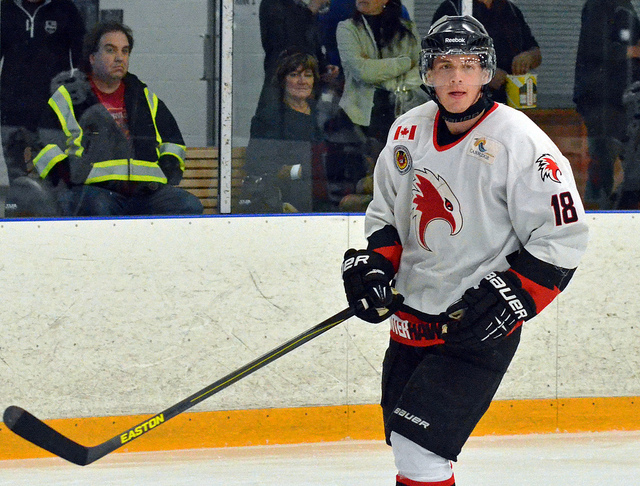
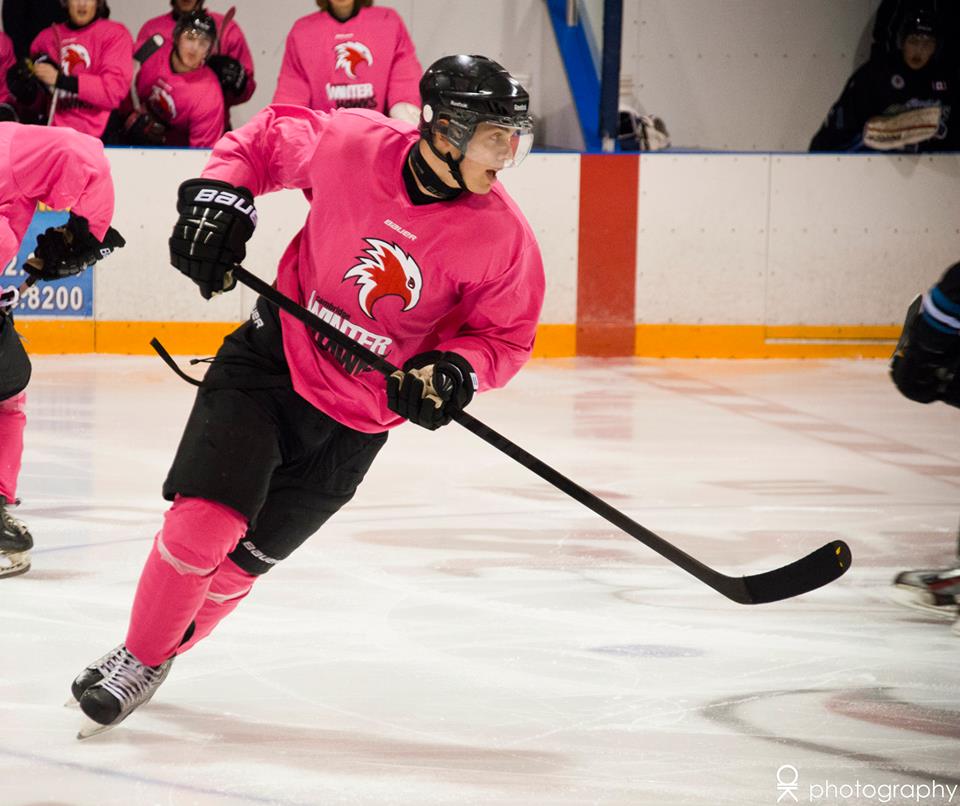
Fresh off his commitment announcement to Colgate University, Adam Dauda took the time to speak to me about his hockey prowess. Born in Slovakia, the aptly nicknamed “Slovakian Stallion” has been recently acquired by the Pembroke Lumber Kings this season after a couple of years suiting up for the Cambridge Winterhawks of the GOJHL. The 19 year old powerhouse is expected to light up the lamp for the Lumber Kings in a promising way this season.
March Hockey: You were a huge force with Cambridge last year. What do you think you can bring to the Pembroke Lumber Kings this season
Adam Dauda: I think by playing in big key moments last year; whether it was to shut down an opponents top line or try to get the game tying or winning goal has helped me a tremendous amount to stay calm but at the same time be excited for big moments like that, Hopefully my experience with it there will come in handy.
MH: You’ve played a season of junior in Slovakia. Is there any differences to the junior scene over there as compared to here? Do you have a favourite moment that stands out from playing overseas?
AD: There are some very big differences between the junior hockey here and in Slovakia. All the games over there are played on Olympic sized rinks which means a lot more skating. For me, that usually isn’t the greatest but it gives everyone a little bit more time with the puck to make smarter decisions. The players over there are a lot more skilled and a lot softer. There wasn’t too much hitting in the games also due to the big ice and the players didn’t seem nearly as strong as the ones here. However, the guys over there definitely taught me how to be a more skilled player.
MH: How would you describe your style of play? Is there any player you look up too?
AD:I really look up to Marian Hossa and his style of play. Even though he’s a winger and I’m center I try to play like him; strong on the puck, skilled, good vision, and still back checks like no other. Also, the fact that he’s Slovak too makes me a bit bias.
MH: What’s your game time routine like?
AD: My game time routine has changed a lot over the years but for the past two seasons it’s stayed pretty much the same. I have to listen to The Language by Drake and then a few other songs before every game. They don’t necessarily fire me up it’s a ritual now that I have to do. My warm up clothes have consisted of my jock and flip flops and some pre game sewer ball victories have to be mixed in there too.
MH: Where would like your hockey career to take you?
AD:I would love to go to a good Division 1 school in the states and then hopefully play in the NHL one day. Playing pro over in Europe would be a bit of a dream come true as well.
MH: If you could play against any player, who would it be and why?
AD:If I could play against anyone I would probably pick Alex Ovechkin just because he is one of the best to ever play hockey.


 rch but one of the four charities that are selected by HPA!













 marchhockey.com
You must be logged in to post a comment.