In a shutout loss to Cardiff Devils last Sunday and then a 7-2 beating at the hands of the Belfast Giants last night, fans are left wondering what is going wrong. Many are displeased and rightfully so but I feel their anger is being fired in the wrong direction.
Taking the brunt of the accusations and decline is head coach Mark Lefebvre. Some of the “problems” can be attributed to him but in all fairness folks, he’s not the one putting pucks in the net. Lefevbre’s job should be insanely easy with big leadership and take control guys like Steve Goertzen and Ryan O’Marra on the ice. It can also be fairly hard to coach a team of players that look like they don’t want to be there. This is exactly the impression the team is leaving. They just don’t look like they want it enough.
Coaching comes in two parts. Pick the right guys and you’re work is pretty much done as most players in this league are smart enough to provide their own leadership and ability. Pick the wrong guys who need the extra kick in the ass most of the time and you could end up screwed.
Of course, Lefebvre was the one who choose his squad and unfortunately, the chemistry he thought would synch up just isn’t there yet. If it was there, he could sit back and laugh his way to a winning season. Alas, hockey works in strange ways. What works on paper doesn’t necessarily work on the ice. It’s still relatively early in the season though and a fresh player signing or two could be just what the doctor ordered. Kudos to Lefevbre for having the balls to address the adversities on social media as well. Can’t commend him enough for letting the fans know he’s heard their cries.
The Blaze should thank their lucky stars for goaltender Brian Stewart as well. He’s third in the league with a 0.923 save percentage and has played the most minutes out of any other keeper but has a GA of 50. That’s 50 GOALS AGAINST IN 18 GAMES. That includes two shoutouts! Where the HELL is the defence. The signings of Rory Rawlyk, Craig Cescon and Kyle Bochek were supposed to mend this problem from last year.
Riding a three game losing streak into this weekend’s battle against the strong squad of the Belfast Giants isn’t going to do them any favours. The players aren’t stupid, they know they’re not playing well. However, I’ll say it again. This is hockey. Losing streaks are going to happen and fans go overboard in retaliation to it. This is what happens when things get too pumped up into the atmosphere during the summer. It’s a long way down when the boat starts to sink.
Blaze fans, relax a little. Have a couple pops (that’s Canadian for beer), sit back and let the team come into its own. A little slump never hurt anybody. Besides, look at the bright side. It’s not like they’re the Edinburgh Capitals!
On the Ontario shores near the central part of the St. Lawrence River lies a city whose habitants ignite a passion for a cold and frosty game. As most Canadian cities do, this one has been breeding hockey players and fans for the better part of 100 years. The history of hockey runs deep in the hard working and blue collar city of Cornwall, Ontario. Many teams have come and gone; championship memories are few and far between but most residents can recall where they were when the Memorial Cup was raised on three separate occasions and which hometown boys have made names for themselves in the game.
After the demise of the major junior powerhouse Cornwall Royals in 1992, fans were left with a gaping hole in their hearts. Junior hockey had just started to become a major attraction across the country. Prayers were answered quickly however when across the river in nearby Massena, New York, the Junior A team of the Americans were sold over the Seaway International Bridge to Cornwall. Renamed the Colts, the new group quickly grew an intensive following even if it was step down in play from the Royals.
Small Canadian cities such as this always come with their own breed of hockey fan. This fan will not only know the life story of every player to ever step onto the hometown rinks, but every stat that comes flowing in. It was no different when hometown boy Jeff Legue laced up his skates night after night and stepped out onto the ice at the Si Miller Arena. He felt like a superstar as fans would stop and ask him for autographs and kids would chant his name as they filled the old barn. “Growing up in a small town that has a successful hockey team is any young players dream,” recalls Legue fondly. “When I got the chance to play in front of a sold out Si Miller Arena, I fulfilled that young hockey players dream.” It wasn’t just his dream. Family, friends and fans alike knew how special it was to have a homegrown superstar stay on the city’s squad. “Both my friends and family got to watch me grow and progress as a player and to this day I believe that’s what helped me the most throughout my junior career.”
In the late 1990’s, the Cornwall Colts were nothing short of a wrecking crew. Finishing a top of the Robinson Division in the Canadian Junior A Hockey League, Legue and the Colts captured two Art Bogart Cups which sent the squad to the Fred Page Cup championships. During his second season with the Colts, the dominance continued as they won the Fred Page tournament and headed off to Nationals in Fort McMurray, Alberta. Even though they went winless, Legue remains proud of the accomplishments. “That year stands out to me the most; we played as a team. We all had our own part in helping our team become successful.”
Successful they were. Legue lists off players who he recognises as the “unsung heroes” on the ice that year. Names like Lindsay Campbell, Ross McCain, Sylvain Moreau, Jarret Robertson and Tim Vokey are thrown about with smiles and fondness. The ultimate compliment however is reserved for someone who doesn’t need any introduction to Cornwall hockey circles, Coach Al Wagar. “Al believed in me,” says Legue with authority. “I was put in all situations at the beginning of my career which gave me lots of experience early.” Wagar coached the Colts for the better part of the decade and along with ownership played a pivotal role in the teams’ success. “He told me my job was to go out and create opportunities. He gave me freedom on the ice. Al Wagar was a great coach for me.”
Legue’s skills both on and off the ice started catching the eyes of NCAA recruiters. After looking over a few offers, the Bulldogs that belonged to Ferris State University became the perfect fit for Jeff to start his successful collegiate career. Located in Big Rapids, Michigan, the Ferris State Bulldogs skate out of the Robert L. Ewigleben Ice Arena; an arena that seats just about 2,500. Along with former Colts teammates Tim Vokey and Matt Verdone, Legue skated alongside current NHLer and Pittsburgh Penguins’ Chris Kunitz; no doubt learning as much as he could from such talented leadership. After contributing a point in each of his 152 collegiate games, it was time to turn professional. After a stint on two different teams in the East Coast Hockey League, Europe came calling. It was time to make some hockey ‘Anarchy in the U.K.’.
In the middle of the United Kingdom lies a city of just over 500,000 people. A hard working and blue collar steel town, the passion for sport runs deep in the city’s inhabitants. Football was a main stay for many in the city of Sheffield and with it came its own special breed of sporting fan. Still reeling from the loss of 96 passionate football fans that were crushed to death in the Hillsborough Stadium disaster two years earlier, a new sport was about to take over in the fall of 1991. Sheffield Arena (now known as Motorpoint Arena) had been built with much precision and its main resident became the Sheffield Steelers Ice Hockey Club. While hockey had been played in the UK for over a hundred years, it just never seemed to catch on. That was about to change.
Arguably the Sheffield Steelers had reached their peak in popularity during the mid-1990s. Partly due to the renaissance that the sport of ice hockey was having and partly due to the squad becoming the first real professional club of its kind in the UK; for all intents and purposes, money talked. You could watch most games from this era and you’d swear it was an NHL game just from the fans that filled the arena. The Steelers were crowned the last champions in 1996 of the Heineken sponsored British Hockey League before the premier of what was the British Ice Hockey Superleague.
(Photo: Dean Woolley)
By the time the modern day Elite Ice Hockey League came to fruition, the Steelers were one of the most decorated clubs in the United Kingdom; obviously a selling point for anyone willing to hop across the pond. Legue was offered a spot and made the trek to set up shop in Sheffield for the 2007-2008 season. Admittedly he didn’t know what he was getting himself into. “When I came to Sheffield I didn’t know what to expect because to be honest, I didn’t know there was hockey here in the UK.” The naivety was soon lost on Legue as he made his first strides on ice in front of the home crowd at Motorpoint Arena. “I soon realised that they are some of the most passionate fans imaginable.”
Legue spent his entire seven year Elite league career with the Sheffield Steelers; the city and the club made an important impression on him his first season. Half way through the campaign Legue got a phone call that no one wants to take while being the furthest away from his family. His father and ultimately one of his biggest fans had been diagnosed with stomach cancer. The organisation didn’t hesitate to send Legue back to Canada. “Sheffield became a big part of my life during that first year,” recalls Legue. “I will always be thankful for how they treated me at that time.”
“My father told me to go back and finish season.” What a finish they had. The Steelers ended up winning the playoffs that year. “Captain Jonathan Phillips made it a point to hand me the trophy first.” With no doubt his father smiling down at him, Legue knew he made the right decision. “That was my most memorable moment as a Steeler.”
Of course, the people he met throughout the city of Sheffield and the success on the ice made it easy for Legue to come back year after year. Meeting his beautiful wife nearby and having his adorable son to raise made it the perfect ending to an illustrious Elite league career.
The game of hockey and the city of Sheffield just couldn’t get rid of him though.
(Payette (7) instructs his Legue (11) and his Steeldog squad. Photo: Roger Williams)
With the EIHL schedule being so demanding with his new family, Legue dropped down a tier to the English Premier Ice Hockey League and is now suiting up for the Steeldogs. Head manned by another Cornwall, Ontario native Andre Payette, Legue is humbled by the fact that there’s another one with him who knows the trials and tribulations of the city he’s from. “It’s always nice to have someone to back up your stories of the beautiful St. Lawrence River.”
Back on the Canadian side, the hockey doesn’t stop in his family at any point. Legue’s brother in law, Brennan Barker, is suiting up for the Cornwall River Kings of the LNAH. Known for its no holds barred fighting, does Legue have any advice? “Other than keep your head up?” he says with a laugh. “Brennan is a tough cookie and he can take care of himself. I’ve seen his hands. I wish him and his team all the best and good luck for the rest of the season.”
As Jeff Legue suits up for the Steeldogs, we can only speculate what’s in his future. Who knows, maybe we’ll see his son continue the tradition and end up back in Canada. The saga continues. For now, this remains how a tale of two cities, with an ocean that separates them for miles, became closer to each other with the power of sport.
I leave you with a video from the Cornwall River Kings from last year that some of you in the UK made not have seen.
Chris Frank of the Elite Ice Hockey League’s Braehead Clan and the rest of Hockey Players Assemble are calling for hockey players all around the world to take part in the 2014 edition of #Muzzy4Money!
Everyone knows who the world has transformed November into Movember in which men grows mustaches for the entire month to raise money for men’s cancer research. Well, Hockey Players Assemble turn it up a notch by raising money for not only cancer research but one of the four charities that are selected by HPA!
Last year they raised a total over $3,000 dollars and they are definitely looking to double next month! There will be plenty of prizes for best ‘staches and ladies, you’re not left out! Prizes will be awarded for your creativity as well! Pick up anything around the house or workplace and turn that into the best handle-bar mustache the world has ever seen.
On November first, you’ll upload your bare face. Every five days you’ll update the world on your fantastic manly mustache.
This campaign is calling for all you fourth line dusters out there. Come showcase your muzzy for money! (Bonus points for your best Lanny MacDonald impression.)
Here’s information on how to register: #Muzzy4Money (click the link)
The NHL is back for yet another season. Yet here I am, unmoved and slightly not as interested as I was in years past.
To say that the National Hockey League has changed since the days when I was younger would be a huge understatement. The face of everything in the sport has changed 100% completely. From teams and players to broadcasting and television hosts; it’s just not the same. You could attribute it to just growing up and being nostalgic about the past but deep down I think it’s simply much more than that.
In a nostalgic sense, I’m lost without Saturday night viewings of Hockey Night in Canada ringing out from the television screen. I realize it’s still going and I’m anxious to see what it’s going to look like but it hasn’t been the same since TSN bought the rights to its historic theme song. Gone are the days of hearing the Coach’s Corner theme song, listening to Don Cherry and Ron McLean banter back and forth during the first intermission break and people actually stopping what they’re doing to listen to Cherry speak (no joke, my family used to drop what they were doing.). Or during the second intermission, sitting through Satellite Hotstove and not Hotstove Tonight itching to get the third period started.
Afternoon games were unheard of on television. It was a privilege to be able to stay up and watch your favourite team on a school night.
The age of the enforcer is dying out. It’s just going to be a chapter in a hockey history book someday. When guys like Mike Milbury, who beat up a fan in the stands with his own shoe, is calling for the end of fighting in the sport you know times have changed. While I could sit here and list all the points as to why fighting and enforcing needs to stay in the game, there’s no point. With the advancement of how concussions and mental health have affected the competitive athlete, it’s a no brainer to end it when your own health is on the line. However, all these same things could happen with a body check, or a trip, or a slash, or even a hard face wash. Taking fighting out isn’t going to stop that.
(Photo: Mark Blinch/Canadian Press)
Everything has a price tag or an endorsement on it. I’m not against making money obviously, but everything just seems so over the top and extravagant. I miss the days of walking into an arena, smelling the fresh PLAIN ice that would just feature the faceoff circles, the goaltenders crease, two blue lines and a red line. Do we really need ref cams? It’s a cool feature but we’re getting a little overboard here.
There’s no loyalty with players anymore. Yes they sign 8 year deals but how many of them actually stick them out? They go where the coin is. You can’t blame them either; that’s all on the owner’s and GM’s but how does one grow attached to a player now? On the same note, there’s a lot of lazy players in the game today. Just want to skate by and grab their cheque. Like, I said, maybe it’s because I’m much older now and see the world differently but I can’t be the only one feeling this way.
That’s why I enjoy the minors and other professional leagues. These guys feel the need to prove something to their fans night in and night out just to keep their jobs. In reality, that’s exactly what it is. Professional hockey is their full time job. With the exception of the NHL and AHL, nobody is getting paid huge wads.
I’m starting to sound like I’m bitter about everything, but I’m not. Hell, if I was offered a $50 million dollar, 8 year contract I’d take it in a heartbeat. Who wouldn’t? But that’s just one area that proves how much the game has changed.
Maybe the spark of the NHL will come back and flicker in my eyes a few more weeks into the season. Maybe it won’t. Things change and evolve over time, that’s just life. Even though it’s changed so much since the days of my youth there’s one thing I can be grateful for.
It gave me the sport I love.
Disclaimer: I realize that there are millions of people around the world who are super excited for this season and I couldn’t be happier! This is just some thoughts coming from someone who has followed the game for over 20 years now.
The past few months seem to have been a trying time for the Philadelphia Flyers hockey club. One of their biggest decisions was the axing of their Ice Girls skating crew. You know, the girls who don scantily clad outfits and help scrap/shovel the ice in the middle of commercial breaks. (Or maybe they attempt to pump up the crowd. I don’t know, I haven’t really paid all that much attention to them until recently. *shrugs*) During the past couple of exhibition games, a new ice crew made up of men that came to fruition was met with a chorus of boos from the male-dominated fans in the arena.
Just like any other business would, the Flyers catered to their customers and with one loud “You asked! We’ve listened!” announcement, the Ice Girls were back and tryouts are being held in the next couple of weeks.
Now here’s where it gets stupid and why I’m torn between being for them or against them.
Personally, I kind of hold them in the same breath as cheerleaders. I realize some teams do cheer but most just clean the ice and get the crowd pumped. Obviously these Ice Girls are just here to entertain and enthrall the male masses. You also have a pretty strong case for their use of objectifying women. I wholeheartedly agree with both statements. You mean to tell me that in the “internet age”, men can’t go three hours without staring at a half-naked young women? The internet equals countless boobs my friend.
There’s also how these women are being treated. Wearing next to nothing in freezing arenas, not being able to wear jackets when they man the doors, not being able to be in the vicinity of ANY player at ANY time whether on the clock or not (it’s not the players prerogative to get up and leave, it’s the girl’s apparently) and much more are just some of the stupid things these girls have to deal with. They also get paid next to nothing. A great article goes into detail about what some of these girls go through and you can read it here.
However, there’s two sides to every story.
In a way, these girls are the embodiment of female empowerment. I’ve read great articles with some of the girls who thoroughly enjoy doing this. It makes them feel good and it makes them feel proud. Both of those things are hard to come by for a woman in this day and age. Sure, they might wear very little clothing but it’s done in a tasteful way. It’s not tacky or slutty. (On the ice that is. You could argue the fact the Ice Girls do sexy calendars. Well guess what, some teams have their players pose and print their own sexy calenders. That’s right, MALE players. And on another note for minor league teams, sold calendars means revenue for the club.)
I would also wager money on this.
I would put money on the fact of if these “fair-weathered feminists” had the body, the moves, the hair, and had the chance to become an Ice Girl and grab the attention that comes with it, they would. No doubt in my mind. (Notice how I say “fair-weathered”, you know the ones I’m talking about.)
If you step back and look at how the Ice Girl is practically just a sub-category of cheerleading, the Ice-Girl really doesn’t come across as such a bad thing. Hell, cheer-leading is a national sport now too. If people want to spin it around and throw a “sex” label on them then well, that’s their problem.
In conclusion, I see both sides of this argument and I agree with both sides. I guess I’m just kind of neutral on the whole subject. Both sides of the coin make really good arguements.
Like I said, I don’t really pay all that much attention to them.
I just know I’d never be able to skate and shovel at the same time. Way too clumsy for that mess.
When my article on the “Dark Side of Hockey” first hit the powerful waves of the internet, Carson Shields was one of the first (if not, the first) players to reach out to me. His story has been very well told in his province of Manitoba and maybe there’s been a little coverage out west but in my neck of the woods of Eastern Canada, I knew that nobody had heard this tale. Right away I wanted to make him one of the first parts in my “Dark Side of Hockey” series. He sent me links upon links of different articles that tell his horrid tale of hazing. I couldn’t even manage to get through watching a video interview, that’s how bad it stung me. This needs to be read by every single person in sports.
——————————
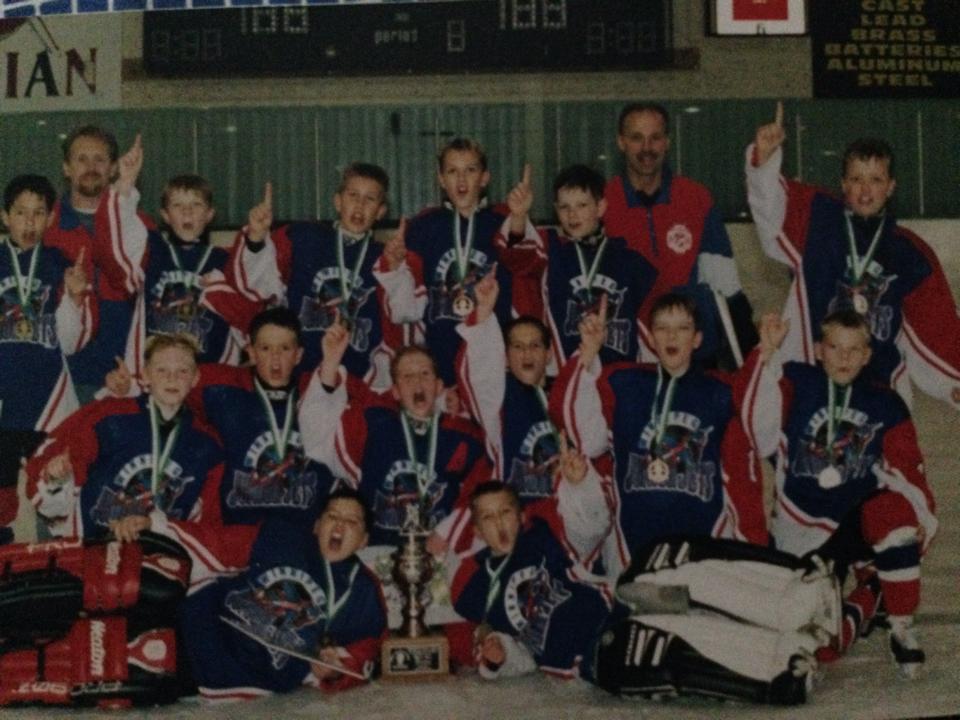
As a young kid growing up in Winnipeg, Manitoba, Carson Shields was fascinated by the Canadian winter past-time of hockey. Just like any other young boy in the country his age he became enamoured with it and one day dreamed he’d be able to take it in at the highest level; the NHL. Seeing something make their boy so happy prodded Shields’ parents to sign him up. He never looked back.
His early days in hockey saw him skate the ice with some of today’s powerhouses. Jonathan Toews and Frazer McLaren were both on his AA Assiniboine Park Rangers squad. By the time Shields reached his teens, his big frame had given him a bit of an enforcer label. Not in a bad way though. He was always the one who would stick up and be there for his teammates. A player that every guy would love to have on his line. The type that every coach would love to have on his team because he actually wanted to learn as much as he could about the game. His skills on the ice were good but not good enough for major junior. His junior career made him make eight different teams in four different provinces between junior A, B, and even C.
The dream of playing professional hockey was the fuel that kept him burning. He traveled so much his Dad (who earned Rookie of the Year honours in the Manitoba-Saskatchewan Junior Football League one season) gave him the nickname “Suitcase”. No matter, he was going to make it.
In his grade 10 year, Shields decided to try out for his high school team. Kelvin High School, out of Winnipeg, Manitoba saw Shields with growing leadership abilities. Along with his drive to play, he earned himself a spot on a team that was mostly made up of 11 and 12th graders.
As he progessed into a new year of junior hockey, Shields found himself as a rookie on a one team. The veterans introduced Shields to the glorious taste of alcohol, something that Shields would become close with in time. Part of the rookie experience on this team was to endure the dreaded hazing ritual then finally be considered one of the boys. Almost like a college fraternity, Shields and a few other rookies swallowed their pride and headed off with the vets to a house that was used for the team one weekend.
No coaches, no parents, nobody but young teenagers were at this so called party. Shields knew that because of his age and his playing abilities, it didn’t sit well with most of the vets on the team. After all, he was a 17 year old. That right there instilled fear to the veterans on the team. Shields could one day steal their job. As the new guy this was going to be their way of getting back at him.
To start off what I call “Hell Night”, the rookies were forced to strip naked in the street and were led to an area where they found six glasses of clear substances staring back at them. Five of them held alcohol, each a different kind. One was water. Once you found the water, you had beat the challenge. Seems simple enough right?
Well, these weren’t shot glasses. Shields went through glasses of vodka, white rum, Sambuca, and two others without finding water. Looking at the sixth one as his saviour, he swigged it down. Wasn’t water.
Once satisfied that the rookies had passed that test, they were fed even more alcohol. The veterans then shoved them all into a room upstairs where most of them were beginning to vomit. Not on the floor, but on each other. They were then forced to “bong” cans of beer. By this point Shields had blacked out. The last thing he remembers hearing were the words, “Alright!! You can bring the girls up from downstairs now!!”
Does he remember the night? He doesn’t have too. The veterans managed to whip out their cell phones and take pictures of the rookies in different humiliating poses. Some urinated on the group while documenting it. Who knows what those girls did to them. It’s these events that give Shields nightmares to this very day. Thankfully this was before the inventions of Facebook and Twitter.
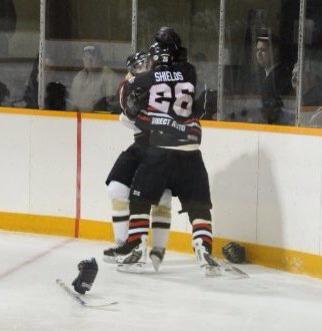
After learning about what had happened to him, Shields contemplated packing it in and ending it all. How he continue with his life after being ultimately humiliated by people he thought had his back? To stuff the memories down, he became cocky and arrogant. His play on the ice dropped and he began using his fists more. Three more years of junior saw him ice 118 games (MMJHL, MJHL, SIJHL, Playoffs, Dudley Hewitt Cup) and capture 417 PIMS; that’s 27 fighting majors.
However, it wasn’t just the play on the ice that changed Shields. His whole demeanor changed. “After the hazing, I became completely out of control. Drugs, booze, women…ANY form of escapism. Anything I could do so I wouldn’t feel like that scared little boy laying on the bathroom floor in puke and piss, having pictures taken of me.” His partying and drinking escalated to where it was a daily occurrence. Thoughts of suicide danced around in his head. He sank himself into a deep depression.
Enrolling himself into the University of Winnipeg didn’t help his cause either. Nobody knew who he was, his hockey reputation didn’t proceed him. He started hanging with a rough crowd and turned to cocaine. During one night out with his drug dealer, he experienced an event that most people in the world never will. The cold steel of a 9mm on the temple of his head.
In one bar fight he got himself into (there was more than a few), saw him break a guy’s orbital bone and fracture his nose. It was beginning to catch up with him. “I was picked up for an Assault Causing Bodily Harm charge,” Shields recalls a much more frightening time which became some what of a wake up call. “I managed to get a great lawyer who got me a conditional sentence which sent me to an anger management program. As long as I completed the program there would be no criminal record.”
This is where Shields life started to take a turn for the better. Through the anger management program, Shields was able to peel back the layers and identify where his anger came from and understand it. The root evidently came from the night of hazing. It hasn’t been all sunshine and roses since but with counseling Shields has been able to come to peace with what happened to him and realize it wasn’t his fault. “I’ve come to terms with what happened to me. I’ve also come to terms with where it took me.”
His love for hockey unraveled but he began to coach. After getting close with some of the young guys on the team, Shields decided he didn’t want to see them go through what he did. So he came public with his story. “I don’t want anyone to go through what I did. I knew that I had to come out with my story and show that it’s important to talk about this dark side of the game.” Upon doing that, he set up an email account to converse with players around the world who were going through or have gone through something similar.
Shields took advantage of his acceptance to University as well. He graduated with a degree in Conflict Resolution Studies, a program that he obviously holds dear to his heart. “We have to continue to change the culture (of hockey).” He’s right. Without stories like these, people will continue to put players in the game on a pedestal. Without stories like these, we’ll continue to think that players are happy-go-lucky people who have it all when in reality, that’s not the case. Shields also goes around and speaks to local schools about his tale, mental health and the horribleness of hazing.
Shields story of courage and strength saw him be nominated and accepted as a “Hero of Manitoba” award winner for 2014. “Our Heroes of Manitoba” showcase the provinces every day people doing extraordinary things. No doubt, Shields was thought of during nomination. “I am very grateful and humbled. I had no idea so many people, teammates and players had nominated me. I didn’t come out with my story to win an award. But hey, if it keeps the conversation going and I can be used as an example of “what not to be”, it is all worth it.”
“All I hope is that the junior community continues to address, be proactive and support players who are struggling in all aspects of the game, not just hazing.” He’s absolutely right. Too much is focused on the playing abilities of the players and not about how the game affects them physically and mentally. The shift in thinking can only help to create stronger players in the long run. “I think the OHL has made a great decision in establishing this new program dealing with the mental health aspect of the game.”
So what’s up for Carson Shields this hockey season? Not much. “I decided to take a step back from the game this year. I played, I scouted and I coached…feels good to just be a fan,” He’s not gone from the game entirely however. “I still keep the door wide open for any player to reach out. I am responsible to that.” He’s in the process of expanding his journal that he had during his hockey days and turning into a memoir entitled “The Beauty”.
Carson Shields is a person who, in the short time we’ve chatted and gotten to know each other, I look up to as a symbol of strength and courage. Take the time to follow him on twitter and send him a tweet of respect. You can find him @CarsonShields23.
———————————-
Feel free to follow me on Twitter: @MarchHockey and like the page on Facebook: http://www.facebook.com/marchhockey and send me a message! If you know any player who’d be willing to add their story to the “Dark Side of Hockey” series, send them my way!



 rch but one of the four charities that are selected by HPA!




 marchhockey.com
You must be logged in to post a comment.